Saturday, June 1, 2019

Children's Day

When I was a kid I asked my friends that if there was a Mother's Day and a Father's day then why wasn't there a Children's Day? Then we kids fantasized as to what Children's Day would be like. Imagine my surprise as an adult when I found out there was a Children's Day! Man, did I get cheated as a kid. 

Children's Day is celebrated on June 1st in China and usually the kids will be given gifts or go on trips. Schools will hold events for kids or even give them a half day off. Here is what we did this year at JNAS

Half of the day the classes went as normal however I decided to give all my students an English book as a gift to take home. My TAs, Jeanne and Lydia, were able to order the books and get them reimbursed by the school. (Thank you guys!) The books I chose and were available for bulk purchase in China were Rainbow Fish by Marcus Pfister, Stuck by Oliver Jeffers, and Harold and the Purple Crayon by Crockett Johnson


When the classes were finished for the day, the student leaders headed to the downstairs auditorium to present on The Leader in Me to parents and a visiting school journalism students. The students were from a public middle school and got to ask our JNAS students questions like a press conference. Even the local newspaper showed up to ask questions much to the delight of the parents. 

Photo courtesy of JNAS. Students in red are from the public school journalism team.
After lunch was served the kids set up booths to sell their old toys or popsicles. Parents showed up so fellow students, teachers, and parents could buy these items. The money raised when to an impoverished school in China. At the same time as these sales booths were going on, each room was set up like a different Asian country. The rooms had decorations and music from that country and also sold those countries snacks and drinks as part of the fundraiser. The kids also dressed in traditional outfits from those countries. 

Photo courtesy of JNAS

Photo courtesy of JNAS
Downstairs was an art exhibit of the students' work that we could tour through. 

Photo courtesy of JNAS
The kids took down their booths and cleaned up the classrooms while the PE teachers set up the basketball tournament. This entire semester the students have been playing in a basketball bracket competition (like March Madness) and this was the finale. The kids earned medals and certificates at the end. 

Photo courtesy of JNAS
Next, the cafeteria and the classrooms set up for a potluck supper. 102 invited me to their class and the homeroom teacher even bought them a big cake! What a lovely way to treat everyone. 


After we ate supper, it was time for the talent show. The students signed up to show off their different skills like singing, dancing, magic, and one student dressed up like Pete the Cat and did a skit entirely in English about the book. 

Photo courtesy of JNAS
Finally, the kids got to camp out at school with their parents and teachers. I went home at this time but the kids always love doing this activity. 
Photo courtesy of JNAS
I loved seeing all the kids' hard work and was so impressed with how well the teachers handled the event and were willing to spend the night with the kids too. That is hard work! This is a day the kids will really treasure as they look back and I will too. 


Jeanne, Lydia, and myself
Susan, Jessica, and myself

Happy Children's Day!

What's Up Doc?

Hospitals are never a fun place to visit. For myself, I find that I get queasy at the smell of rubbing alcohol because it reminds me of being in a hospital. Have you noticed that hospitals smell like rubbing alcohol? Well, they do in America but they definitely don't in China. 


In China the hospitals are super different than what I am used to. To start, the hospitals are not as sterilized as American hospitals. They actually remind me more of public malls because there are ton of people walking through the halls, the floors are dirty, and people are smoking everywhere. 

Picture taken in a hospital in Jiaxing
Maybe its because China is so big that they need to do this but in Jiaxing there are several different hospitals that specialize in things. There is a hospital for maternity, a hospital for women and children, a hospital for men, a hospital just for plastic surgery, and a hospital for general surgery. There is also the hospital for foreigners to get their medical check-ups to get clearance from the government to get their residence permits. So if you have an emergency you can't just go to any hospital, you have to go to the one that meets your needs or you will just get transferred. In my hometown you can go to the hospital to give birth, get surgery, or for general check-ups. 

When you first go into a Chinese hospital you have to go to the front desk and get a plastic card. The card is given to doctors and the doctors type in your information and load it on the card. You also have to give your insurance card to the hospital. Despite what many of Westerners think, China does not have universal health care, it is similar to the USA insurance wise. I think the medical information card is interesting because then all of your information is on it and you don't have to fill out the same questionnaire a million times. 

Next you go to the floor that caters to your needs. There is a person sitting in front of a window who will ask you to fill out paperwork and you give them your insurance and medical information card. They will give you a number and you head to the hallway that caters to your needs. From there you wait until your number is called or shown on the screen. Then you head to your doctor who leaves the door open. Also not common in the west. I was surprised that during my visit, other patients would pop their heads in to ask the doctor questions in the middle of my visit. The doctor will sometimes only briefly look over you if they feel that they are too swamped. I had to demand a longer visit so the doctor would look at my busted knee further. 

When you are done with your visit you go back to the person at the window and give them your cards and then you pay your bill. It is typically 20 RMB but could be more depending on what it is. Then in the lower level of the hospital they have a pharmacy so you can get your medicine right there! You get a number, wait for it to be called, and then give them the doctor's script. You pay and head out. I really wish we had this in America! I hate driving across town to get my medicine. One thing I don't like is that some of these doctors will suggest Traditional Chinese Medicine, which can be a good complimentary medicine but not primary care. 

One interesting thing about doctors in China is that they are considered middle class. They aren't paid super high amounts like they are in America. That was kind of surprising to me. Even heart or brain surgeons can't be upper class in China. I think that is why so many are leaving for the USA and quitting the profession. 

If you do have end up in a Chinese hospital you will for sure need someone to speak Chinese to go with you. It is very confusing to go on your own the first time and all of the doctors in my city don't speak English. I had a co-worker last year who went to Shanghai for their doctor visit and more of them spoke English and she said the hospitals were cleaner. 

Chinese and American hospitals do have their pros and cons. Chinese hospitals have pharmacies in the lower levels and you don't have to fill out a ton of paperwork. American hospitals have non-smoking rules and you get more personal care. Chinese hospitals don't smell like rubbing alcohol like Americans one do, you can decide if that is a pro or a con if you end up for a visit. 

Thursday, May 30, 2019

Up in Smoke

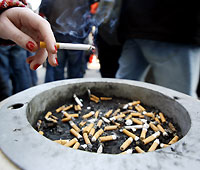
When you first come to China it is surprising how bad the pollution can be. According to Inverse.com one day of bad air equals 40 cigarettes. It is surprising than that despite the bad air, a lot of Chinese people smoke. 

Image from http://www.chinadaily.com.cn/olympics/images/attachement/jpg/site1/20070829/001aa018ff9c083f0b8e01.jpg
According to the article on en.huanqiu.com there are about 316 million smokers in China and about 6.4 million people have died from tobacco related diseases as of 2015.  The same article found that those who lived in poor areas smoked more often. However, in my experience I have seen a lot of Chinese people smoke no matter if the city is Beijing, Shanghai, or Jiaxing. 

The smoke that comes off Chinese cigarettes is very different than American cigarettes. I would say it smells heavier and more like chemicals than American brands. This could be because Chinese cigarettes have more metals in them. 

Whatever you might be thinking, there are rules about smoking in public in China but they are not as strict as they are in the USA and the smokers are a bit more...aggressive. In my own apartment there is a sign in the elevator that says 'no smoking' and it has been torn down by angry smokers three times now. It is amazing that there is someone in my building who is so desperate to smoke on their 30 second elevator ride that they would tear down a sign so they can have deniability. No matter the place people will try to say that they didn't know that smoking was not allowed.
Smoking in restaurants, in elevators, and in parks are commonplace. As an American, this was a culture shock for me since the only places you can smoke are in outside designated areas or in your own home. There are smoking bans in China; the non-smoking areas include schools, temples, and subways. Children's hospitals are a non-smoking destination, however regular hospitals seem to be exempt. I was shocked when on my first hospital visit people were smoking in the lobby areas and in the halls there were people lighting up. That would never be possible in America!

I have also noticed that most smokers are men and I found this observation was correct from the article on chinaplus.cri.cn. I couldn't find a reason as to why this was; it is clearly a cultural influence. It is surprising to me that even my male friends who like to lift weights or play basketball smoke almost a pack a day. When I asked them about it they said they understood the dangers of smoking but didn't plan on quitting. 

One last item I noticed about smoking is the boxes they are sold in. In America, the boxes have a General Surgeon warning on the box telling people the dangers of smoking. In Australia the boxes will have grotesque pictures on them showing what can happen to you if you continue to smoke. 

Image from https://wwwassets.rand.org/content/rand/blog/2014/09/graphic-warning-labels-on-cigarettes-are-scary-but/_jcr_content/par/blogpost.aspectcrop.868x455.cm.jpg/x1495294905259.jpg.pagespeed.ic.POT8cuccwL.jpg
Chinese cigarette boxes are actually pretty. The popular brand is made of shiny red paper with a gold building on the front; no warning, no gross pictures, just shiny red and gold. I know Chinese people who like foreign smokes but refuse to look at the boxes because of the warnings.

Image from https://upload.wikimedia.org/wikipedia/en/d/d5/Chunghwa_Filter_Kings.jpg
Smoking is so prevalent that it is common for brides and grooms to give out cigarettes as party favors during weddings and they are a popular gift during Chinese New Year. Smoking is a cultural phenomena that you will definitely have to get used to when you are here. 
So if you come to China, try not to get smoked out. 

Monday, May 13, 2019

"Ancient" Water Towns

One of the biggest tourist attractions in Chinese cities would most definitely have to be their water towns. 
Moon River in Jiaxing
Water towns are tourist areas that are supposed to look like ancient Chinese cities complete with bridges with dragons on them, booths selling traditional Chinese goods like fans and jade, and of course a lot of food. Type in any Chinese city on TripAdvisor and I guarantee that one will pop up. 


Courtesy of TripAdvisor
These places are really cool and bring in a ton of both Chinese and foreign tourists. A popular thing to do in water towns is to go to a store that rents traditional Chinese clothes and you can walk around the town taking photos. 
Tourists wearing traditional outfits
Some of the water towns will also have small theatres where the actors are all in traditional outfits. However, I have yet to find a single Peking Opera in China. They will sometimes have more gimmicky places to attract customers like a dinosaur museum with a moving dinosaur robot in front. 


In a new water town in Jiaxing, Xin Xitang.
Almost all of these water towns have their own "specialty" as well. In Huangshan they were famous for wood carvings and in Jiaxing they spin sugar into animal shapes. 
You can spin the arrow and it will land on an animal that the sugar maker can draw. 

Sugar spun animals
Shoe store in Huangshan
These water towns look old and sell old items and promote how they have these ancient scholars that used to live there, but in reality most of them were probably made in the last 20 years or so. There are a very few original water towns left in China. There may have been more water towns today if it were not for the cultural revolution
If the town is original they will most likely be gated and will charge a fee at the door. 

I do really like going to these water towns. They are very beautiful and versatile! During the day they have a lot of family friendly events and at night they will have bars and pubs to visit. After a while I do admit, the water towns all start to look the same but after two years I still like to visit them once in a while. 


Eat your heart out Aaron. Hangzhou water town. 

Xin Xitang

Friday, May 10, 2019

Wild Rice Festival

Spring is in the air which you know what that means...Wild Rice Festival! At least in Jiaxing that is what it means. My Jiaxing friends told me this festival is something that only happens in our area which is quite special. 

To welcome in spring the people of Jiaxing will eat the foods that are available that time of year which include peas, lima beans, wild rice, and sausage. They also will eat a century egg during this time for good luck. I haven't eaten that egg and don't plan to but the wild rice is lovely. 

The rice is cooked over a fire pit and people will do this in parks or in their own yards. We did this at our school's green house area. 


The parents brought various meats and fruits and the school provided the lima beans and peas. 


The students got to peel the beans and peas and then spent most of the time hanging out with their friends and reading books. 


Since it was in our school's green house area there were lots of opportunities to take nice pictures. Here I am with my TAs Lydia and Jeanne. 

Jeanne, myself, Lydia

The week before our school had this festival, Jeanne had invited me to her family's home and we also ate wild rice. 

Jeanne's daughter, Juliet, playing with a bubble blower.


She also took me to a tourist area where we drank tea and walked around for the day. It's a super family friendly festival and a lot of fun!


 If you are in Jiaxing around spring time then you can join in on the fun too. 
Hope to see you then!

Thursday, May 2, 2019

Don't Sweat It

"I'm sweating like a pig!" This is a phrase that people say often in the USA when they are sweating heavily but it turns out pigs don't actually sweat that much. 
When I ran out of my US deodorant in China and went to the store I found that they only had two different brands, they only had about 20 bottles for sale in the entire store, and they only had spray on or roll on. I thought it was strange and when I asked my Chinese friend why this was she said, "Don't you know? Chinese people don't sweat!" I felt as shocked when I heard about this.
My next thought was, "Wait, we are all human. Don't all humans sweat?" 


Actually my friend was wrong, kind of. What I found is that those with European and African ancestry have sweat glands that make them smell bad. East Asians do have sweat glands but it does not smell (Adams, 2017). But why does Asian sweat not smell? There are a few theories.

The theory so far is that the ancient Asian population would only have children with those who did not have these smelly sweat glands so it was cut out from the gene pool (Adams, 2017). Pheromones can be found in sweat, why do I bring that up? Pheromones are a chemical that causes changes in hormone levels,which can make woman ovulate and more likely to conceive a child (Sanders, 2006). Perhaps those with non-smelly sweat had more attractive pheromones than the smelly guys. That is just my guess. 

It was discovered that the gene responsible for wetter earwax was also linked to stinky sweat glands. Dry earwax was linked to non-smelly sweat glands (Vergano, 2013). What is the evolutionary purpose of these things? Scientists are still trying to figure that out. Maybe there was an evolutionary purpose to being non-smelly and have dry earwax in ancient Asia and smelly in Europe and Africa. 

I found on Internetlooks.com that evolutionary we look different based on where our ancestors lived. Ancient Asians lived in area that was deeply cold, mountainous, and very windy, so why would they need to develop sweat in a cold place? Compare that to the Caucasian race who lived in semi-cold and forested areas and the Black race who lived in a hot desert environment (Human Differentiation: Evolution of Racial Characteristics, 2017).

So if you come to Asia and you are white or black you might want to stock up on your deodorant because unlike your Asian friends, your sweat stinks. 


Sources
Adams, Cecil. “Do Chinese Lack Sweat Glands in Their Armpits? Why Does Spicy Food Make You Sweat?” The Straight Dope, The Straight Dope, 29 Nov. 2017, www.straightdope.com/columns/read/2417/do-chinese-lack-sweat-glands-in-their-armpits/.


“Human Differentiation: Evolution of Racial Characteristics.” Human Differentiation: Evolution of Racial Characteristics, 2017, internetlooks.com/humandifferentiation.html.


Sanders, Robert. “Male Sweat Boosts Women's Hormone Levels.” 02.06.2007 - Male Sweat Boosts Women's Hormone Levels, UC Berkeley, 6 Feb. 2006, www.berkeley.edu/news/media/releases/2007/02/06_sweat.shtml.


Vergano, Dan. “No Sweat? If You Have This Gene, You May Not Use Deodorant.” USA Today, Gannett Satellite Information Network, 18 June 2013, www.usatoday.com/story/tech/sciencefair/2013/06/17/armpit-gene-deodorant/2432749/.

Wednesday, May 1, 2019

Freak Show or Belle of the Ball?

If you are a foreigner living in China you will get stared at, especially if you live in an area that has a low amount of foreigners living there. I don't really mind the stares but I do mind when people take pictures of me without my permission. I also don't like it when a child yells "WEI GUO REN" or "FOREIGNER" two inches away from my face. 

However, when I moved to China and got stared at I felt perplexed. Was I being stared at because I was considered really beautiful or was I considered some sort of freak show in female Asian beauty standards. I did some investigating into the matter.


Image from https://cdn.drawception.com/images/panels/2014/9-8/A8tZtqAXas-6.png
In Asia, having light and pale skin is the goal. There are companies that sell whitening creams to get this effect. The creams can have anything from pearl powder to straight up bleaching properties. This is theorized to have started during ancient history where if you were rich, you could stay indoors but if you were poor, you had to work outside. Working outside caused the skin to become brown but staying inside meant your skin could be pale. This beauty standard can be seen in older Western culture as well (ie. Snow White). You can read more about the white skin standard here

Having large eyes and a double eyelid is another beauty standard in Asia. The reasons are debated and I think this NPR article does an excellent job asking those questions. To boil it down, people aren't sure if the double eyelid surgery is to look more Caucasian or if a bigger eye is just the standard in Asia now. The surgery is widely popular and the average price is around $3,000.

Being skinny is sought after for Chinese women and not just thin, I'm talking skinny. Having an exaggerated hour glass shape is not the beauty standard in China like it is in the USA. There is a skinny social media challenge in China called the A4 Challenge and this is where women try to be slimmer than a piece of A4 sized paper. I questioned if there was a rise of eating disorders from this truly unattainable challenge but according to this article from the Eating Disorder Hope website, cases are going unreported due to mental health stigma. In my own gym I have seen women ask their trainers to be thinner and they refuse to take boxing classes or lift weights for fear that their muscles will make them look bulky. 

So am I a freak show or a belle of the ball? Due to my race, I do have pale skin and large eyes but also because of my race I am taller than most Asian women. I have also done MMA boxing for about four years which makes me "bulky" compared to other women here. 

Really, I will probably never know if I am beautiful or ugly in Asia, for sure I do look very different than the average person in China and maybe the stares are more from shock of seeing someone that looks so different than anything else. 

*These standards are mostly for Asian females. The Asian male standard may differ when it comes to body size.*